Shop Scores
Please note that all score purchases are digital downloads only.
Each purchase is licensed for 1 printed copy only.
Please note that all score purchases are digital downloads only.
Each purchase is licensed for 1 printed copy only.
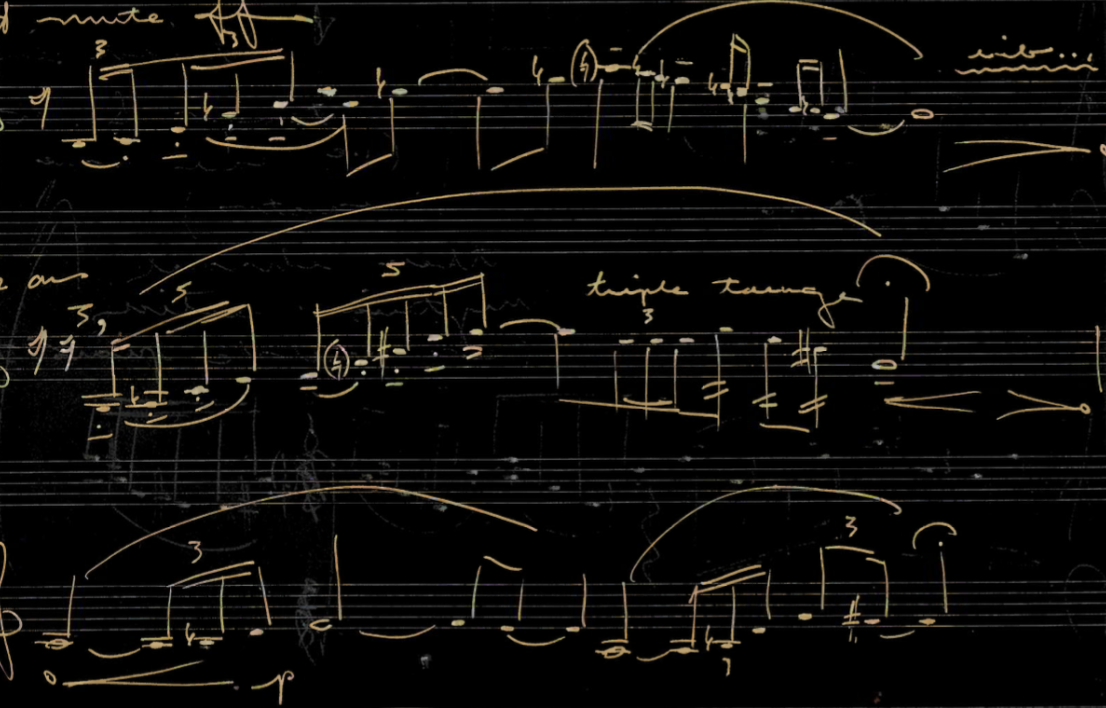
For Trumpet/Flugelhorn and Piano (2026), duration: 10’
When someone who is important in your life leaves you — a friend, a partner, a family member — their absence takes up a part of you. You find yourself trying to compensate for the part of yourself that is gone. The sensation is felt most when you are going about your day — working, commuting, with friends — and you see the person everywhere, and you look again only to find a stranger in the place of your imagination. In many ways then, we are all living with ghosts, and all we can do is readjust our life, so it feels more full, more complete. But the memories, and the reality of our irrevocable loss are still there.
This work was Commissioned by the Australian National Academy of Music (ANAM) as part of The ANAM Set 2026 and written for Lewis Grey, with its world premiere during ANAM’s 2026 recital season at the Abbotsford Convent, Melbourne. The ANAM Set 2026 is supported by the Lee Family Foundation. This work was first performed by Lewis Grey and Berta Brozgul on the 7th of September at the Rosina Auditorium.
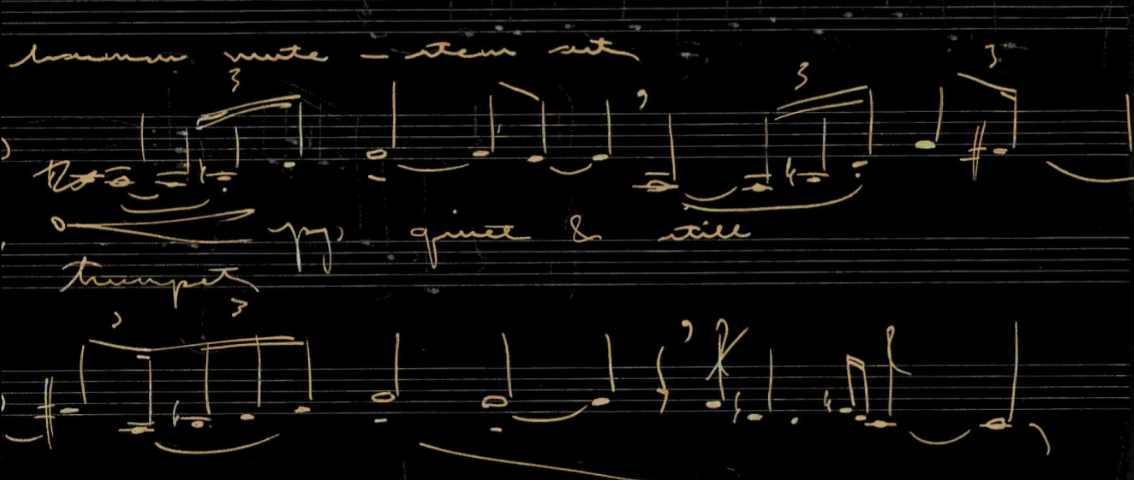
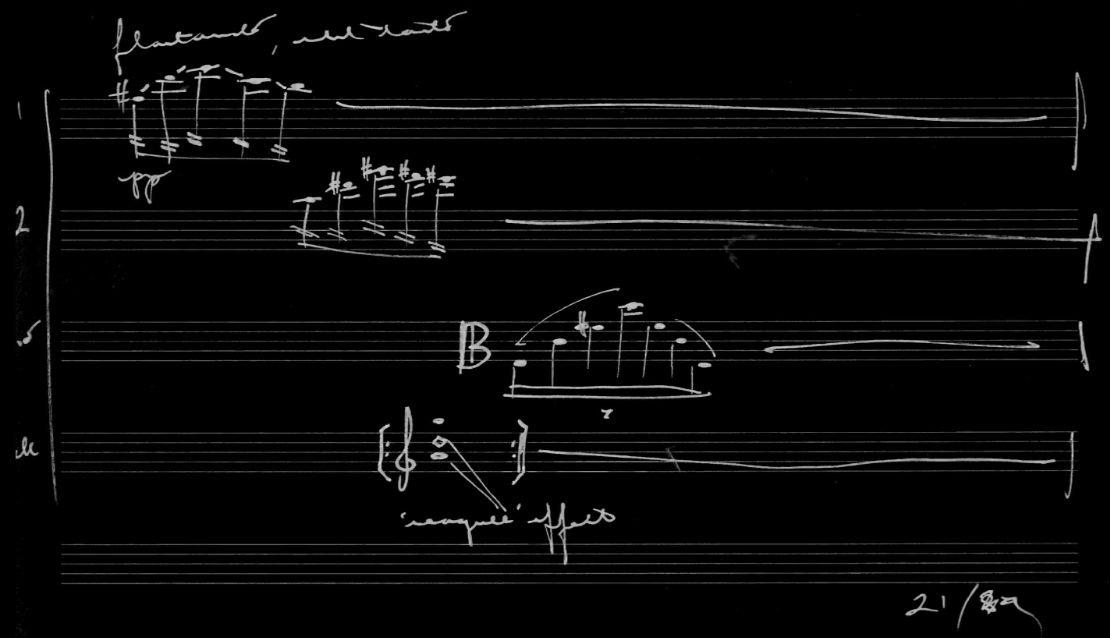
For Four Trumpets (2026), duration: 4’
Many of my works are written in one way or another about memory. This work was written for the VCA 2026 dance collaboration ‘We are All Animals’, taking place in the former mounted police stables, south of the Birrarung (Yarra River). The work remembers the human and non-human bodies that existed prior, and furthermore, the large immigrant population that lived and worked on these lands. This was part of the opening of the work, performed in the Wetlands outside the stable, a place now marked by colonial power. It evocates the experience of non-human bodies – horses in particular – prior to the mass gentrification of the city. The work is contemplative and still, disrupted by echoes of colonial power.
For String Quartet (2026), duration: 7’
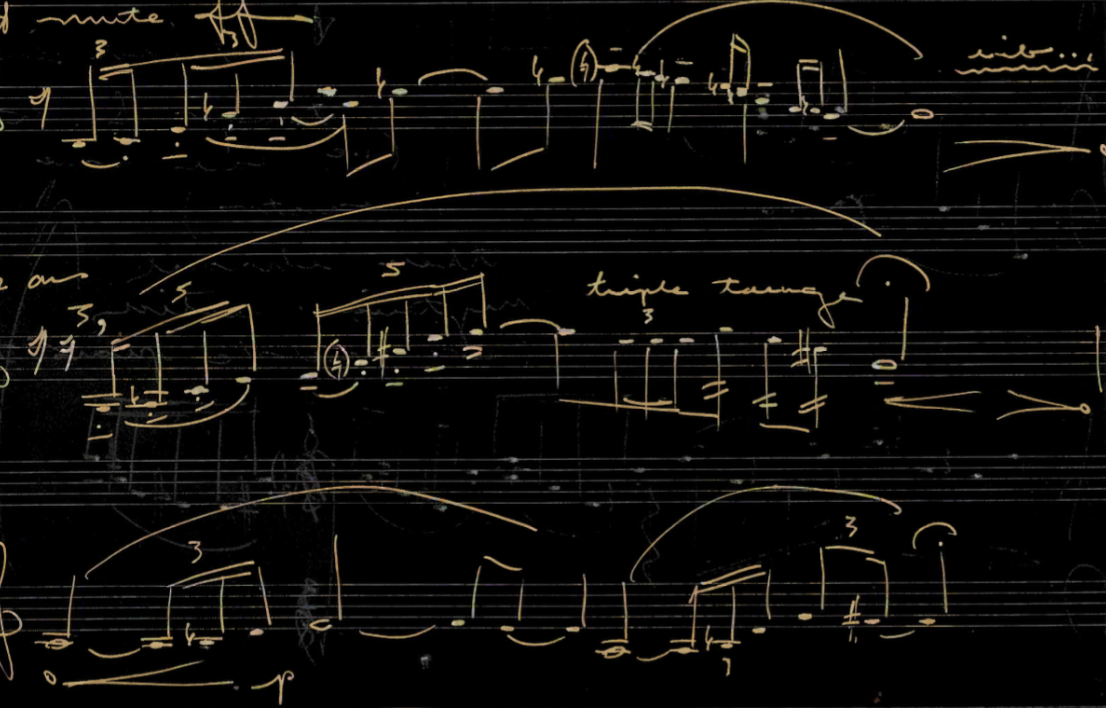
This work is based off several photos by Peter Hujar, part of the ‘Orgasmic Man’ Collection (1969). Hujar was a contemporary of photographers and artists such as David Wojnarowicz and Diane Arbus – all of which in one way or another captured the experiences of queer people in 1960s New York. The photos have always haunted me. They capture several queer men at the point of ejaculation – one of the most inherently private and intimate human experiences. The photos make the viewer feel a sense of voyeuristic discomfort, because you can’t quite tell whether the subjects of the photos are in pleasure or in pain. All that you aware of is that you are trespassing on an intimate, vulnerable, and shameful state. This feeling of visceral discomfort was a starting point for my work, as I am fascinated with the idea of desire and how it’s projected in all my works. There’s also another level to the work. There is something intensely moving and poignant about Hujar’s work for me. He was cataloguing a collection of neglected experiences in the queer community that would have otherwise gone unnoticed and unremembered. There is a sense in all his photographs that the subject is trying to speak to the viewer through time, saying, ‘I was here, and I always will be.’ Now, we often associate the experience of being queer with joy, but there is the inevitable converse of that. The photography of Hujar is ultimately – for me – a reminder that we are allowed to feel joy and express love because of the protests and silent experiences of past generations. I come back to these photos often, and all the men in the photos still seem to be saying the same thing – ‘I was here.’ This work was written for the Mivos Quartet as part of the 2026 Vienna Contemporary Composer’s Festival.
For Solo Piano (2026), duration: 4’
I’ve always felt that a place — a city, a hometown — is a living, breathing thing. Over the years, it attunes itself to the emotional geography of your life. And you begin to treat that place like a part of yourself. You walk on the left side of the street because the 7.30 light falls better, you don’t visit that bar because it reminds you too much of him. These are the places that carry everyone we ever loved, and every person we used to be. This piece was first performed on the 13th of May in Hanson Dyer Hall.
For Clarinet, Cello and Piano (2025), duration: 7’
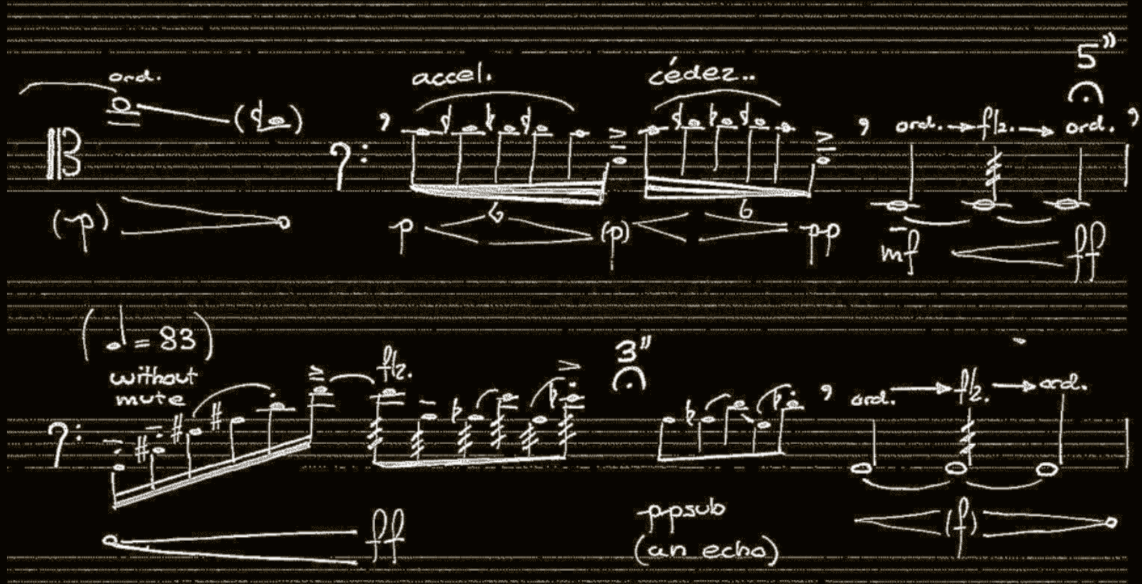
‘Aubade of a Broken Sky’ was written as a reaction to a similarly titled poem by Ocean Vuong – ‘Aubade of a Burning City’. I was struck not only by his evocation of the Vietnam War, but by the visceral, raw quality of his writing. He often places pleasure and pain side by side, blurring the lines between the two in an unbearable way. Similarly, the photography of Peter Hujar – specifically the queer-centered collection ‘Orgasmic Man’ – blurs a similar line. You are unsure whether the subjects of the work are in pleasure or in pain. Yet you know in both cases that through being a witness to the art, you’re trespassing on something intimate. My own work reacted to this – to how closely these innermost feelings sit to one another. This work was first performed on the 10th of October by Ensemble Liaison at the Athenaeum Club, winning the 2025 Athenaeum Club Composition Competition.
For Trumpet and Piano (2024), duration: 12’
I. The Furthest City Light
II. Luminary Clock
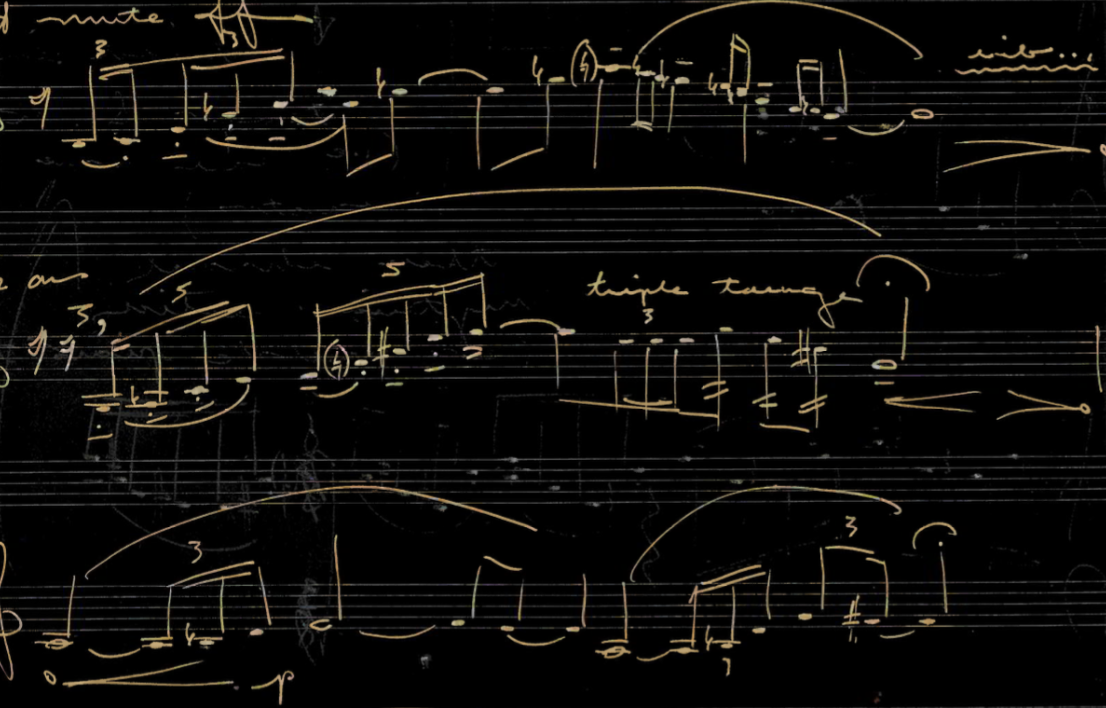
This two-movement work ‘Acquaintances’ attempts to bridge the distance between notated and improvisatory musical styles. Programmatically, the piece is a meditation inspired by Robert Frost’s Acquainted with the Night, resulting in music that is transitory and dream-like, the second movement in particular reflecting the constancy of a ‘Luminary Clock’. The First Movement is recitative-like, in a rough Arch Form, with an almost symmetrical structure and broad gestures from the Trumpet and Flugelhorn. The central piano theme of the Second Movement is static, beneath free, improvisatory gestures. Although improvisatory, the movement does incorporate more formal compositional features, such as the middle section’s displacement and metric alterations of the theme. This piece was first performed by Yael Marks and Max Kielly on the 14th of June 2024, at Ormond College.
For Soprano Saxophone and Piano (2025), duration: 8-9’
This work was first conceived at the beginning of January. I knew I wanted the piece to be a continuation or a ‘reply’ to a jazz standard of some sort. I settled on ‘They Can’t Take That Away from Me’ (George Gershwin, Ira Gershwin), a striking piece to me because unlike many love songs of the American Songbook, the song seems to focus of the small, everyday aspects of love. I also found a lyric that was especially poignant – ‘We may never, never meet again.’ I don’t usually like writing overly sentimental music, but in this case, I believe this song is truly about acceptance. About the transience and everyday aspect of love. This piece was written for Tom Lowe, to be premiered at the 2025 World Saxophone Congress in Harbin, China.
Premiered by Tom Lowe on the 7th of August 2025 at the 2025 World Saxophone Congress in Harbin, China. This piece was originally written for Saxophone Quintet (Soprano 1, Soprano 2, Alto, Tenor and Baritone), but this arrangement is for Solo Soprano Saxophone and Piano. This arrangement was premiered on the 26th of August 2025 on 3mbs, by Tom Lowe and Max Kielly.
For Saxophone Quintet (2025), duration: 8-9’
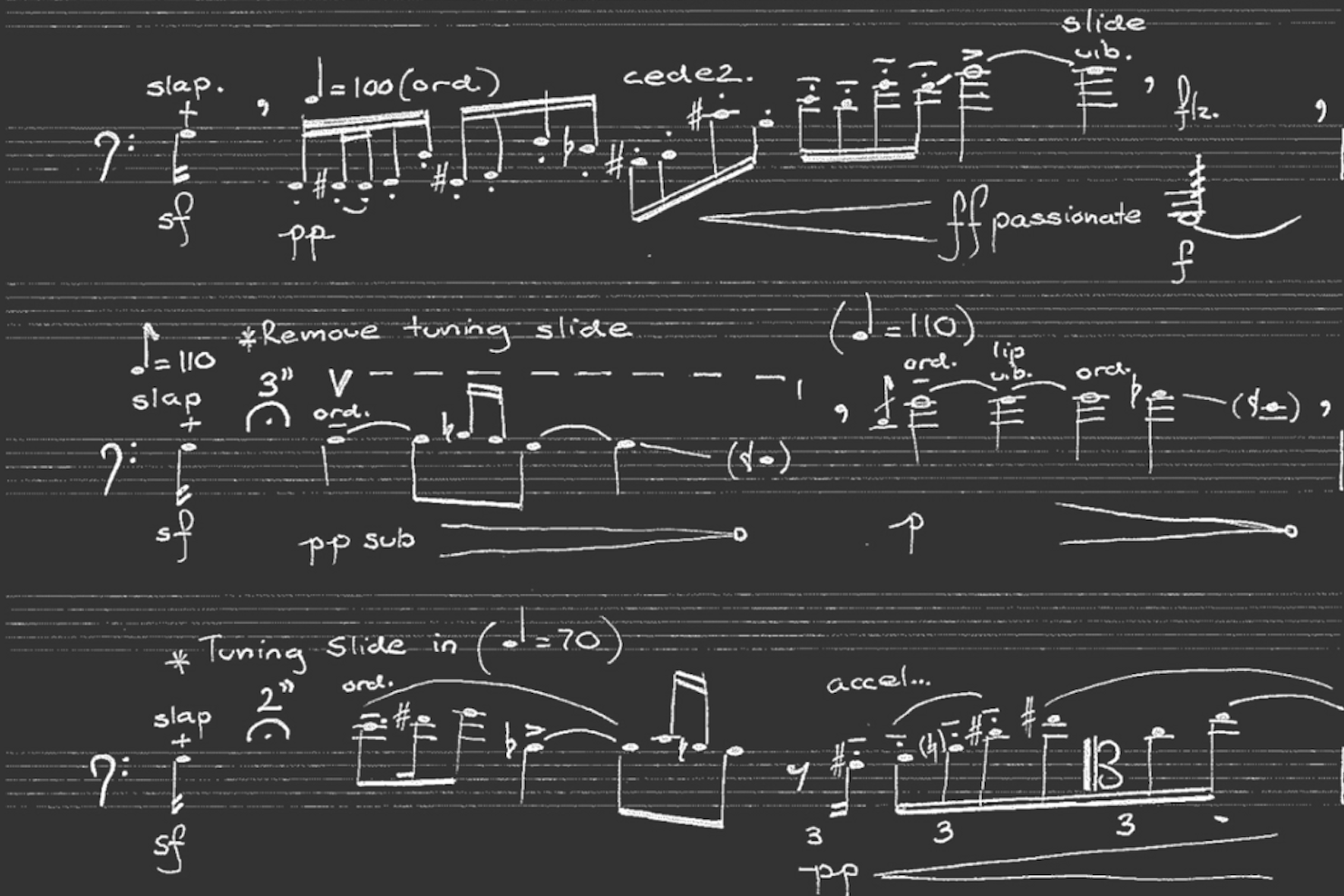
This work was first conceived at the beginning of January. I knew I wanted the piece to be a continuation or a ‘reply’ to a jazz standard of some sort. I settled on ‘They Can’t Take That Away from Me’ (George Gershwin, Ira Gershwin), a striking piece to me because unlike many love songs of the American Songbook, the song seems to focus of the small, everyday aspects of love. I also found a lyric that was especially poignant – ‘We may never, never meet again.’ I don’t usually like writing overly sentimental music, but in this case, I believe this song is truly about acceptance. About the transience and everyday aspect of love. This piece was written for Tom Lowe, to be premiered at the 2025 World Saxophone Congress in Harbin, China. This work was premiered by Tom Lowe on the 7th of August 2025 at the 2025 World Saxophone Congress in Harbin, China.
For Solo Piano (2025), duration: 5’
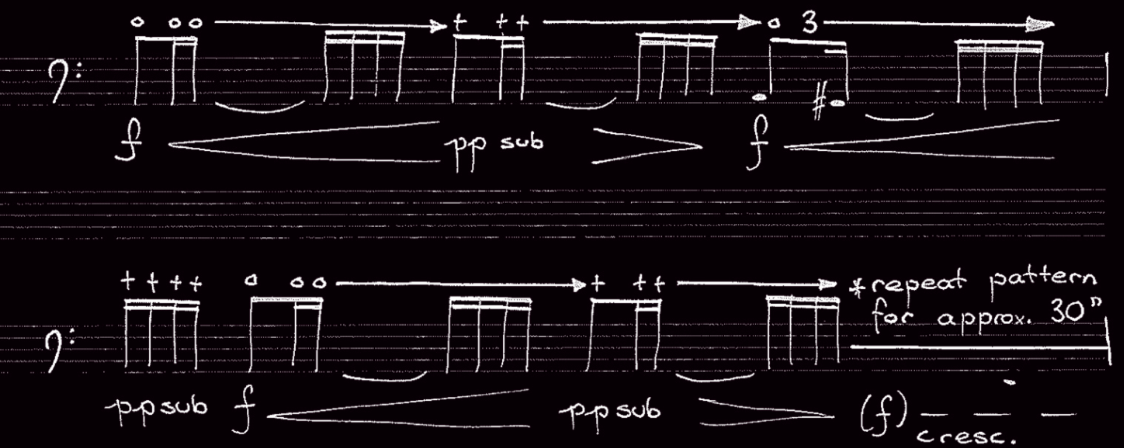
This piece responds directly to a photograph by Diane Arbus – “The Backwards Man in His Hotel Room”. The work is one of Arbus’s early works, and in each piece, there is always a sense that she recognizes the subject and the subject recognizes her – an act of mutual seeing. This picture in particular always seemed like such a complete picture of loneliness, and the despair one feels when they are at odds with their own body. There is something poignant about the hotel room as well – the bare lightbulb, the asymmetrical furniture. The sense that the very world of the photograph is temporary and fleeting. That the man in the picture – maybe a contortionist? – is performing for themself. Ever since first seeing the photograph, I have always wanted to write music to accompany it. Music that would be both tentative and voyeuristic, and that expresses that same sense of loneliness.
For Solo Piano, (2025), duration: 1’30”
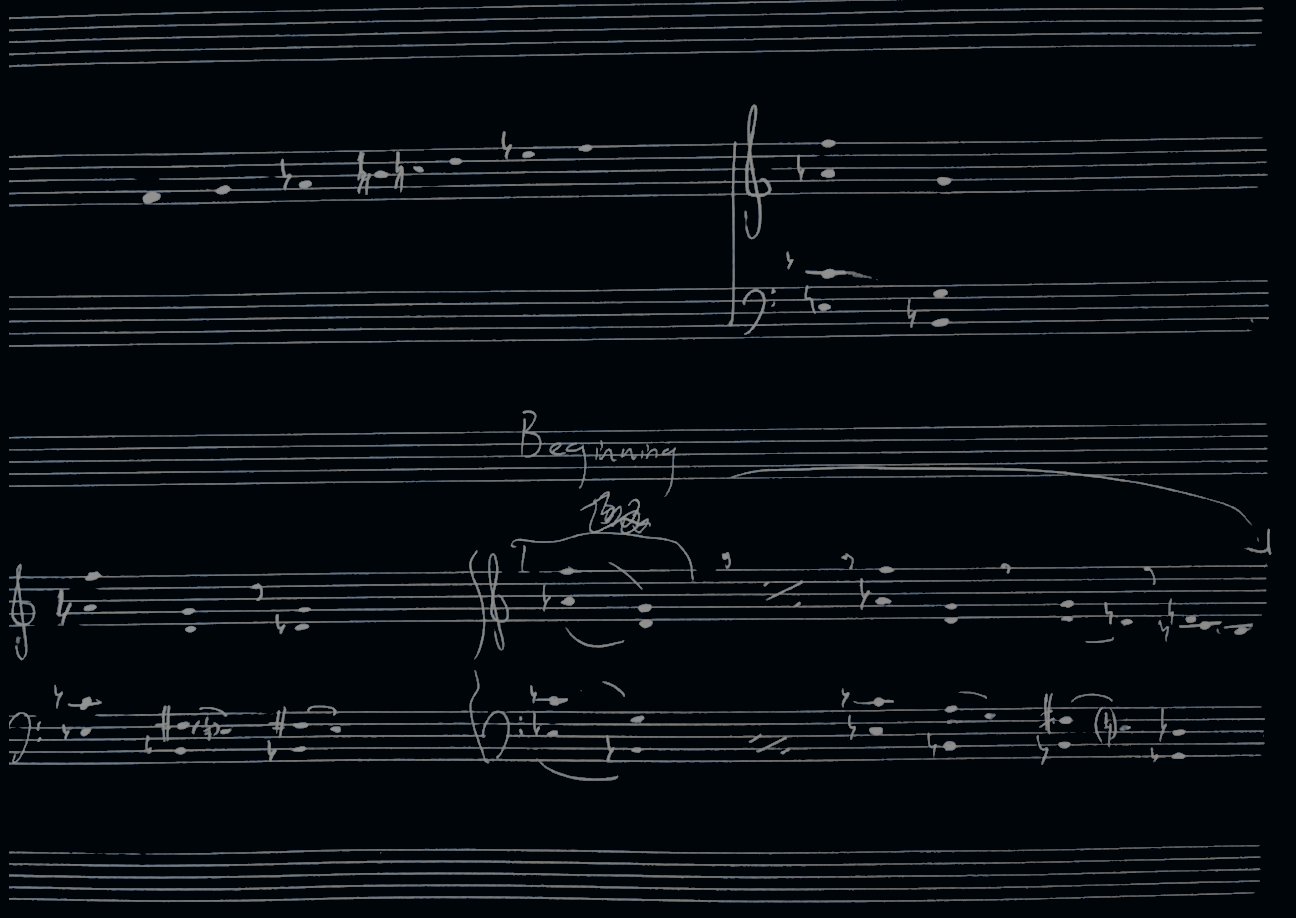
There are paths in outer Kangaroo Valley that I would often walk through. If the time of day was right, the escarpment would glow of amber, illuminating the burned trees on the ridge line. Since 2020, much of the land has been going through a process of quiet regeneration. Although now the damage is almost invisible, there are still small signs of what was. I frequent those paths less often now, but I walk through them when I can. This work was written quickly, in one night and lots of the harmonic language goes back to my first musical influences – Bill Evans in particular. As well as this, I was feeling the nostalgia of returning to a place that holds so many complicated memories. It was a strange feeling – like running into an old friend, and partway into the conversation, you realise you in fact have nothing in common anymore, and you don’t even know how to meaningful talk to this person. The piece simultaneously looks back to what was, and forward to what may be. Written for the World Piano Teacher’s Association Australia (WPTA) Inaugural International Piano Competition.
No results match your search. Try removing a few filters.